|
STATUS
Listed as threatened in the UK, and protected under schedules 5 and 6 of the Wildlife and Countryside Act. Classified
as near threatened by the IUCN Red List, and listed under Appendix III of the Berne Convention. The Red Squirrel is a protected
species in most of Europe.
RANGE
Red Squirrels are found across most of Europe, into northern Asia and Siberia. In this part
of its range the Red Squirrel is not threatened. However in the UK it is now mostly restricted to Scotland and the Border
area between Scotland and England, with its main strongholds being in the East, North-east, Central and Argyll areas of Scotland.
THREATS
In the last 70 years the dramatic decline of the native Red Squirrel has
been due to loss and fragmentation of habitat, disease and in particular, competition from it's larger cousin the American
Grey Squirrel (Sciurus carolinensis). The Grey Squirrel debarks our mature native trees killing them; it can also eat and
digest the fruit and flowering parts of plants whilst they are still 'green' in the spring whereas the Red Squirrel
cannot - thus Red Squirrels go hungry in the late summer and autumn as there is no stock left on the trees and plants to ripen;
and the Grey Squirrel is an immune carrier of the Squirrel Pox Virus which it can pass to Red Squirrels with devastating results.
A Red Squirrel coming in to contact with an infected Grey Squirrel will die within 12 days, and there is no cure. The Pox
causes ulcerations to the head, eyes, hands and mouth which prevents the animal from eating or drinking and it starves to
death.
FACTS
- the population of red squirrels in the UK is estimated to be c.120,000 and they are now competing
for food and habitat with an estimated c.3,500,000 Grey Squirrels
- 76% of red squirrels in the UK
live in Scotland
- the average size of a squirrel's body is
between 180 and 220mm
- red squirrels weigh between 250 and 340g
- their
tail can measure between 170 and 190mm
- the long 'fluffy' tail
is thought to help the squirrel keep it's balance and steer when jumping from tree to tree
- the
tail is also used to keep it warm at night and to serve as a visual warning of danger to other squirrels
- audible
warnings include the 'chuck-chuck' which can be heard when they think that they are in danger
- red
squirrels shed their coat twice a year - in the spring they shed from the head to the tail, whereas in the autumn they shed
from the tail to the head - no one knows why it happens like this
- squirrels can be left or right
handed - and this can be seen when studying spruce cones for example - the 'helical pattern' left after a cone is
stripped will run down the cone either from left to right or right to left depending on wheather the squirrel who ate it was
left or right handed
- mating occurs in February and March and again in the summer
between June and July. Where food is abundant and other environmental conditions correct, red squirrels have been known to
have 3 litters a year
- the gestation period for a squirrel is approximately 38 to 39 days
- average
size litters are 3-4, and the young are called kittens, kits or pups
- squirrels
have multiple partners and mate many times during their lives
- the lifespan of a red squirrel
is on average 3 years, but they can live up to 6 years in good conditions
- dominant animals in squirrel communities
are normally the largest, it is not sex related
- a squirrel nest is known as a
drey
- squirrels are known to share dreys with each other for extra warmth outside the breading season
- red
squirrels eat seeds of trees, fungi, berries and ripe fruits
- 60-80% of the active period of
a squirrels day will be spent foraging and feeding
- one of the red squirrels'
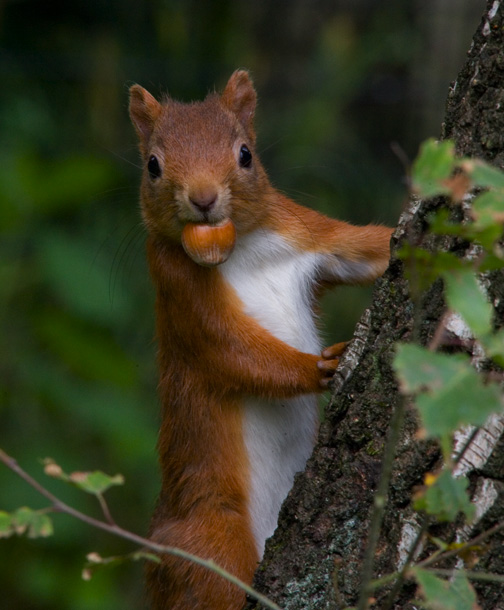
preferred foods is the hazelnut - it has a higher calorific value than most of its other foods and has the duel benefit of
sharpening its teeth to get through the hard outer shell
- excess food is put into caches
or buried in holes or nooks to be eaten during times of food shortage
- squirrels will also take fungi
to the drey where it will dry out to be eaten on days when it is to cold or wet to go out foraging
- many
caches are never found again as squirrels cannot remember where they are and have to search for them when they are needed
- deer
antler is a great source of calcium for squirrels and they can often be seen gnawing on a piece of dead antler - this is also
good for sharpening their teeth
WHAT FOODS CAN YOU PROVIDE?
It is best to feed a variety
of different foods, similar to those that the squirrel might forage for in the wild. The red squirrel will eat nuts and seeds
found naturally in your garden, as well as those in woodland areas.
The most suitable foods for red squirrels are
hazelnuts, sunflower seeds, beech (cob) nuts and pine nuts. Sweet chestnuts and walnuts are also suitable. Unsalted peanuts
are another favourite, but should be not be given in isolation. Some squirrels also like oats. Red squirrels don’t like
maize (sweet corn).
Young red squirrels can suffer from calcium deficiency if they feed too often on the wrong
sort of food. Therefore, peanuts should not be given exclusively, but as part of a varied diet.
If available, an additional calcium source could be provided with your squirrel food. This is particularly valuable during
the summer for juvenile and female squirrels. To counter calcium deficiency provide: pieces of apple or carrot; a supplement
added to the feed or a dish of drinking water; bone meal added to the dry feed mix; a cuttlefish bone or deer antler placed
near the feeder.
Also provide a source of water year
round if it is not naturally available.
Please
note that grey squirrels love maize (corn) and mixed squirrel food, therefore, to discourage them, don’t provide these
foods.
|